
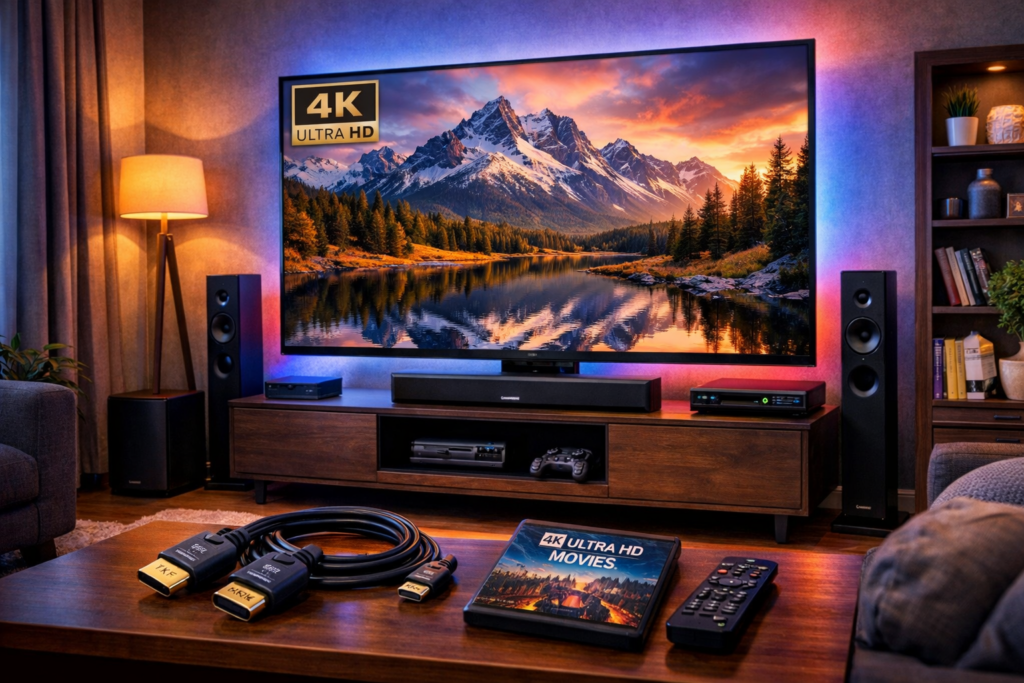
4K viewing experience mastery guide explaining powerful secrets to improve picture quality, streaming, TV setup, and immersive ultra-HD entertainment at home.
Introduction to the 4K Viewing Experience
The 4K viewing experience has transformed how people watch television, movies, and online content. Just a few years ago, Full HD was considered the gold standard for picture quality. Today, however, Ultra High Definition has become the preferred choice for viewers who want stunning clarity and immersive entertainment.
Simply put, the 4K viewing experience delivers four times the resolution of standard 1080p HD. That means sharper images, deeper colors, and incredible detail. When properly set up, viewers can notice textures in clothing, subtle lighting changes, and background details that were previously invisible.
In recent years, streaming services, gaming consoles, and broadcast networks have embraced 4K technology. Platforms such as Netflix, Amazon Prime Video, and YouTube now offer large libraries of ultra-high-definition content. According to industry reports, global adoption of 4K televisions has grown rapidly as prices continue to drop and technology improves.
But here’s the thing: owning a 4K TV alone doesn’t guarantee the best 4K viewing experience. Many users fail to adjust settings, optimize their internet connection, or select the right content sources. As a result, they miss out on the full potential of their device.
This guide reveals nine powerful secrets to help you maximize your home entertainment setup. By following these tips, you’ll improve image quality, enhance sound, and enjoy cinema-level viewing right in your living room.
Let’s dive into the technology behind 4K and discover why it has become the future of digital entertainment.
Understanding 4K Resolution Technology
To truly appreciate the 4K viewing experience, it’s important to understand what makes this technology special. The term “4K” refers to a display resolution of approximately 3840 × 2160 pixels. That means the screen contains more than 8 million pixels, delivering significantly more detail than previous standards.
Pixels are the tiny dots that form an image on your screen. The more pixels a display contains, the sharper and clearer the picture appears. When you combine millions of pixels with advanced color processing and high dynamic range (HDR), the result is stunning realism.
Difference Between HD, Full HD, and 4K
Resolution standards have evolved over the years.
| Format | Resolution | Total Pixels |
|---|---|---|
| HD | 1280 × 720 | ~1 million |
| Full HD | 1920 × 1080 | ~2 million |
| 4K Ultra HD | 3840 × 2160 | ~8 million |
As you can see, the 4K viewing experience dramatically increases the number of pixels displayed. This allows viewers to sit closer to larger screens without noticing pixelation.
Why 4K Is the New Entertainment Standard
Several factors have contributed to the rapid adoption of 4K technology:
- Streaming platforms support Ultra HD content
- Gaming consoles render 4K graphics
- Television manufacturers prioritize 4K displays
- Prices have become more affordable
Additionally, modern TVs often include technologies such as HDR, advanced color processing, and AI upscaling. These innovations enhance lower-resolution content so that even older movies look better on a 4K screen.
Industry experts widely believe that the 4K viewing experience will remain the primary standard for home entertainment for many years, even as 8K technology slowly emerges.
Now that we understand the basics, let’s explore how to choose the right equipment for the ultimate viewing setup.
Secret #1: Choose the Right 4K Display
The foundation of a great 4K viewing experience is the display itself. Selecting the right television or monitor makes a huge difference in picture quality, brightness, and overall performance.
Today’s market offers several types of display technologies, each with unique advantages.
OLED vs LED vs QLED Displays
Here’s a simple comparison of the most popular display types:
| Technology | Advantages | Best For |
|---|---|---|
| OLED | Perfect blacks, incredible contrast | Movie lovers |
| LED | Affordable and bright | General TV watching |
| QLED | High brightness and vibrant colors | Bright rooms |
OLED displays are often considered the best option for cinematic viewing because they produce deep blacks and exceptional contrast. However, LED and QLED televisions remain excellent choices for many households.
Screen Size and Viewing Distance
Choosing the correct screen size is also essential for the best 4K viewing experience.
General recommendations include:
- 43–55 inches: Small to medium rooms
- 65 inches: Standard living room size
- 75 inches or larger: Home theater setups
Viewing distance matters as well. Because 4K resolution is so detailed, viewers can sit closer to the screen without noticing pixels. This creates a more immersive experience.
In short, the right display forms the backbone of your home entertainment system.
Secret #2: Optimize Picture Settings
Many people never adjust their television settings after buying a new device. Unfortunately, factory settings rarely deliver the best 4K viewing experience.
Proper calibration can significantly improve picture quality.
Color, Contrast, and Brightness Settings
Start with these basic adjustments:
- Reduce overly bright “store display” settings
- Adjust contrast for deeper blacks
- Set brightness for comfortable viewing
- Fine-tune color saturation
Most TVs also include preset modes such as Cinema, Sports, or Game Mode. Cinema mode often provides the most natural colors for movies and shows.
HDR and Dolby Vision Enhancements
High Dynamic Range (HDR) technology dramatically enhances the 4K viewing experience. It increases the range between dark and bright areas, producing richer colors and more realistic lighting.
Popular HDR formats include:
- HDR10
- HDR10+
- Dolby Vision
When enabled, these features allow compatible content to display vibrant highlights and improved shadow details.
Taking a few minutes to adjust these settings can transform an ordinary image into a breathtaking visual experience.
Secret #3: High-Speed Internet for Streaming
Streaming has become the most common way people access 4K content. However, a slow connection can ruin the 4K viewing experience with buffering and lower resolution.
Minimum Internet Speed for 4K
Most streaming platforms recommend at least:
- 25 Mbps for stable 4K streaming
- 50 Mbps or higher for multiple devices
If several users share the same network, higher speeds may be necessary.
Wired vs Wireless Streaming
Although Wi-Fi is convenient, wired connections often provide more stable performance. An Ethernet cable reduces interference and ensures consistent streaming quality.
To learn more about recommended speeds and streaming requirements, you can visit
https://www.speedtest.net
Maintaining a strong internet connection ensures your 4K viewing experience remains smooth and uninterrupted.
Secret #4: Use High-Quality HDMI Cables
Surprisingly, cables can affect the 4K viewing experience. Older HDMI cables may not support the bandwidth required for Ultra HD content.
Modern setups should use HDMI 2.0 or HDMI 2.1 cables, which support:
- 4K at higher frame rates
- HDR signals
- Advanced gaming features
While expensive cables aren’t always necessary, choosing certified high-speed HDMI cables prevents signal issues and compatibility problems.
Secret #5: High-Quality Audio for Full Immersion
Visual clarity is only part of the 4K viewing experience. Sound plays an equally important role in creating an immersive atmosphere.
Soundbars vs Home Theater Systems
Soundbars are a popular upgrade for TV speakers because they’re compact and easy to install. Many models support surround sound technologies such as Dolby Atmos.
Home theater systems, on the other hand, provide the most immersive experience with multiple speakers placed around the room.
Both options dramatically improve audio compared to built-in TV speakers.
Secret #6: 4K Content Sources
Even the best equipment cannot create a perfect 4K viewing experience without high-quality content.
Popular sources include:
- Streaming services
- Ultra HD Blu-ray discs
- Gaming consoles
- Digital downloads
Streaming platforms continue to expand their libraries of Ultra HD movies and shows. Many new films are now produced and distributed in 4K by default.
Secret #7: Smart Lighting and Viewing Environment
Room lighting has a surprising impact on the 4K viewing experience. Excessive brightness or glare can reduce contrast and make images appear washed out.
For optimal viewing:
- Use dim lighting
- Avoid direct sunlight on the screen
- Install blackout curtains if necessary
- Position lights behind the TV
Some enthusiasts even add LED bias lighting behind the screen to reduce eye strain and improve perceived contrast.
Secret #8: Keep Devices Updated
Technology evolves rapidly, and firmware updates can enhance the 4K viewing experience by improving performance and compatibility.
Manufacturers often release updates that:
- Improve HDR processing
- Add streaming apps
- Fix connectivity issues
- Enhance picture quality
Checking for updates every few months ensures your device performs at its best.
Secret #9: Future of the 4K Viewing Experience
The 4K viewing experience continues to evolve as new technologies emerge. Artificial intelligence is already being used to upscale lower-resolution content with impressive results.
Future innovations may include:
- AI-powered video processing
- Higher frame rate content
- Improved HDR standards
- Hybrid 4K and virtual reality experiences
Although 8K displays exist, most experts believe 4K will remain the dominant standard for home entertainment for the foreseeable future.
Frequently Asked Questions
1. What is a 4K viewing experience?
A 4K viewing experience refers to watching content with Ultra High Definition resolution (3840 × 2160 pixels), which provides sharper images and more detail than Full HD.
2. Do I need special cables for 4K?
Yes. High-speed HDMI cables that support HDMI 2.0 or HDMI 2.1 are recommended for the best 4K viewing experience.
3. How fast should internet be for 4K streaming?
Most services recommend at least 25 Mbps for smooth streaming, though faster speeds provide better reliability.
4. Is OLED better than LED for 4K?
OLED often delivers superior contrast and deeper blacks, making it ideal for cinematic viewing.
5. Can older movies look good on a 4K TV?
Yes. Many televisions use AI upscaling to improve lower-resolution content, enhancing the 4K viewing experience.
6. How far should I sit from a 4K TV?
The ideal distance depends on screen size, but viewers can sit closer to 4K displays without noticing pixels.
Conclusion
The 4K viewing experience has revolutionized home entertainment by delivering extraordinary picture quality and immersive realism. However, achieving the best results requires more than simply purchasing a 4K television.
By selecting the right display, optimizing settings, improving internet speed, and upgrading audio equipment, you can unlock the full potential of Ultra HD technology. Small adjustments—from better lighting to firmware updates—can make a significant difference in overall performance.
As streaming services and content creators continue embracing Ultra HD production, the future of the 4K viewing experience looks brighter than ever. With the right setup, your living room can rival the visual quality of a modern cinema.