
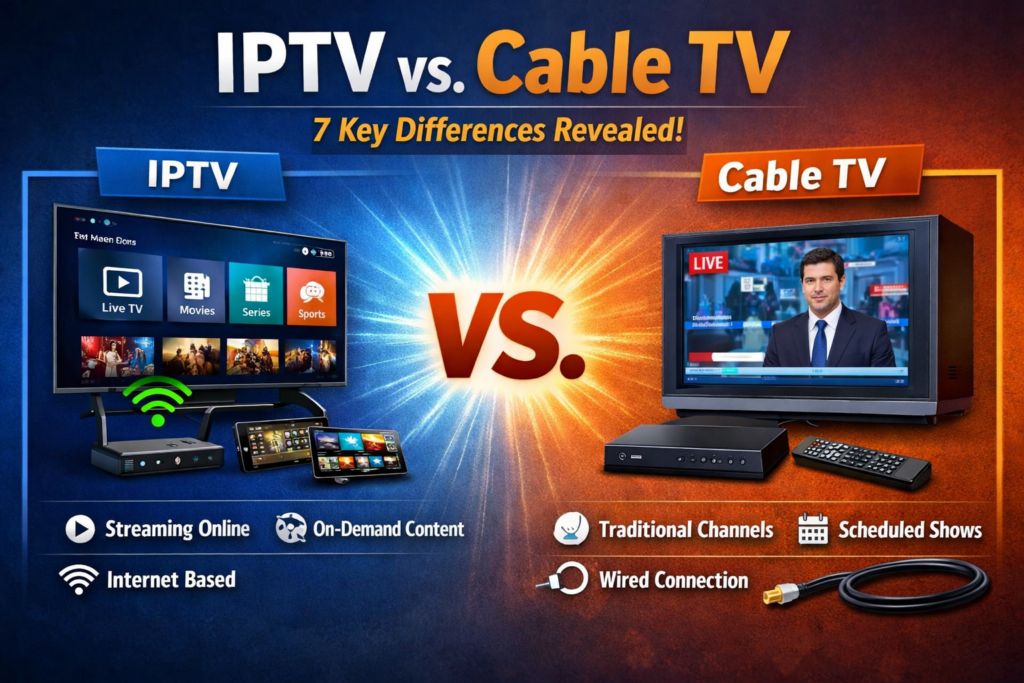
IPTV vs cable TV comparison that clearly explains costs, features, quality, and flexibility to help you choose the smartest TV option in 2026.
Introduction to IPTV vs Cable TV
The IPTV vs cable TV comparison has become one of the most discussed topics in home entertainment. People everywhere are cutting cords, exploring smarter streaming options, and asking a simple question: Is IPTV better than cable TV? Well, you’re not alone. This guide breaks it all down in plain English.
IPTV, short for Internet Protocol Television, delivers television content over the internet. Cable TV, on the other hand, relies on physical coaxial cables and fixed infrastructure. Both offer live TV, movies, and sports, but the experience is worlds apart.
In this IPTV vs cable TV comparison, we’ll explore technology, pricing, quality, flexibility, and real-world usability. By the end, you’ll know exactly which option fits your lifestyle, budget, and viewing habits.
What Is IPTV?
IPTV is a modern television delivery system that streams content using internet connections instead of traditional broadcast methods. It’s flexible, customizable, and growing fast.
How IPTV Works
IPTV sends TV signals through IP networks. Instead of receiving all channels at once, users stream only what they select. This makes IPTV more efficient and interactive.
Key features include:
- On-demand streaming
- Live TV over the internet
- Cloud-based servers
- Compatibility with smart devices
Types of IPTV Services
There are three main IPTV formats:
- Live IPTV – Real-time TV channels
- Video on Demand (VOD) – Movies and series anytime
- Time-shifted IPTV – Catch-up TV and replays
These options make IPTV a strong competitor in any IPTV vs cable TV comparison.
What Is Cable TV?
Cable TV is the traditional method of television broadcasting through coaxial or fiber-optic cables. It has been around for decades and remains popular in many households.
How Cable TV Works
Cable providers transmit signals from central hubs directly to homes. Channels are bundled and broadcast simultaneously, whether you watch them or not.
Traditional Cable Packages
Cable TV usually includes:
- Fixed channel bundles
- Long-term contracts
- Installation fees
- Limited customization
While reliable, cable TV often lacks flexibility, which becomes obvious in an IPTV vs cable TV comparison.
IPTV vs Cable TV Comparison: Core Differences
This section highlights the main contrasts between IPTV and cable TV.
Technology and Infrastructure
IPTV relies on broadband internet, while cable TV uses physical networks. IPTV doesn’t require heavy infrastructure, making it easier to scale and update.
Content Availability
IPTV often provides:
- Thousands of global channels
- Extensive VOD libraries
- International content
Cable TV typically offers region-locked channels with limited on-demand options.
Picture and Streaming Quality
Both can deliver HD and 4K. However, IPTV quality depends on internet speed, while cable TV quality is more stable but less adaptive.
Pricing and Cost Transparency
Cost is one of the biggest deciding factors in the IPTV vs cable TV comparison.
IPTV Pricing Models
IPTV services usually offer:
- Monthly or yearly plans
- No contracts
- One flat fee
This makes budgeting easier and cheaper for most users.
Cable TV Pricing Models
Cable TV often includes:
- Hidden fees
- Equipment rental costs
- Price increases after promotions
Over time, cable TV tends to be more expensive.
User Experience and Flexibility
Device Compatibility
IPTV works on:
- Smart TVs
- Smartphones
- Tablets
- PCs
- Android boxes
Cable TV usually requires proprietary hardware.
Portability and Mobility
IPTV lets you watch anywhere with internet access. Cable TV is tied to your home. This flexibility gives IPTV a clear edge.
Reliability, Stability, and Support
Internet Dependency
IPTV performance depends on internet quality. Cable TV works even during minor internet outages.
Customer Service Experience
Cable providers offer traditional support centers. IPTV support varies by provider but often includes fast online assistance.
Security, Legal, and Privacy Considerations
Legitimate IPTV services are legal and secure. Users should always choose reputable providers and protect privacy using strong passwords and secure networks.
For official guidance on cable regulations, visit the Federal Communications Commission (FCC) website.
IPTV vs Cable TV for Sports, Movies, and Families
- Sports fans: IPTV offers global sports channels
- Movie lovers: IPTV has massive VOD libraries
- Families: Cable TV may feel simpler for non-tech users
Pros and Cons Table
| Feature | IPTV | Cable TV |
| Cost | Lower | Higher |
| Flexibility | High | Low |
| Contracts | None | Required |
| Portability | Yes | No |
| Channel Variety | Massive | Limited |
Frequently Asked Questions
Is IPTV better than cable TV?
Yes, for flexibility, cost, and content variety, IPTV often wins.
Does IPTV need fast internet?
A stable 20–30 Mbps connection is usually enough.
Is cable TV still worth it?
It can be for users who prefer simplicity and stability.
Can IPTV replace cable TV completely?
For most households, yes.
Is IPTV legal?
Legal IPTV services are completely lawful.
Which is cheaper: IPTV or cable TV?
IPTV is generally more affordable long-term.
Conclusion: Which One Should You Choose?
The IPTV vs cable TV comparison clearly shows that IPTV offers better value, flexibility, and content variety for modern viewers. Cable TV still has its place, but IPTV is shaping the future of television.
If you want freedom, lower costs, and global entertainment, IPTV is the smart choice in 2026.